Build lasting customer trust with personalized, transparent marketing strategies. Discover how ethical data practices boost loyalty and drive success today.
January 21, 2026

In today's digital landscape, establishing genuine trust with your audience is more critical than ever. Consumers are increasingly discerning, demanding authenticity and clarity from brands they engage with. As marketing evolves, strategies centered around personalization and transparency have emerged as vital tools for building lasting customer relationships. Leveraging data-driven insights while maintaining ethical practices can significantly enhance trust, leading to increased loyalty and advocacy. In this article, we explore how businesses can implement effective personalized, transparent marketing strategies to foster trust in a competitive environment.
Trust is the foundation of any successful customer-brand relationship. According to recent studies, consumers are more likely to purchase from brands they perceive as honest and transparent. A survey by Northwestern University highlights that 81% of customers need to trust a brand before engaging or making a purchase. Building trust not only improves customer retention but also enhances brand reputation and reduces churn.
In an era marked by information overload, consumers seek transparency about how their data is collected and used. They want brands to be open about their practices, demonstrating respect for privacy and ethical standards. As the article "Consumers demand transparency" indicates, transparency in marketing fosters credibility and emotional connection, which are crucial for long-term loyalty.
Personalization has transformed marketing from a one-size-fits-all approach to a tailored experience. By analyzing customer data, such as browsing history, purchase patterns, and preferences businesses can deliver highly relevant content and offers. According to McKinsey, personalized marketing can boost conversion rates by up to 20% and significantly improve customer satisfaction.
However, effective personalization requires careful data handling. Ethical data collection practices, such as obtaining explicit consent and providing clear opt-in options, are essential. This not only ensures compliance with regulations like GDPR but also demonstrates respect for customer privacy, reinforcing trust. For example, offering customers control over their data and transparent explanations of its use fosters a sense of security and confidence in your brand.
One notable example is Amazon's recommendation engine, which uses browsing and purchase data to suggest relevant products. This approach has contributed to Amazon's reputation for customer-centricity and reliability. Customers appreciate the tailored experience, which reduces search time and enhances satisfaction. Such personalization strategies, when executed ethically, serve as powerful trust builders and can set brands apart in competitive markets.
Transparency begins with clear, honest communication. Brands should openly share their data collection and usage policies, making them easily accessible and understandable. The article on transparency in marketing emphasizes that honesty about practices builds credibility and trustworthiness.
In addition, providing customers with straightforward options to control their data (such as granular privacy settings) demonstrates respect and openness. Offering transparent analytics and feedback mechanisms also reassures consumers that their concerns are valued and addressed, fostering a two-way trust relationship.
Patagonia exemplifies transparency by openly sharing their supply chain practices and environmental impact. Their honest communication has resonated with eco-conscious consumers, strengthening loyalty and advocacy. Such transparency not only enhances trust but also aligns brand values with customer values, creating a deeper emotional connection.
Collecting data ethically involves obtaining informed consent, limiting data collection to what is necessary, and safeguarding information against breaches. Implementing strong security protocols and regularly auditing data practices demonstrates responsibility and commitment to privacy. As noted in Nez&pez's resource, ethical data practices are central to building credibility and trust in marketing campaigns.
Furthermore, brands should educate consumers about how their data is used, including benefits like personalized experiences or exclusive offers. Transparency about data practices and showing tangible benefits reassure customers and foster a sense of partnership rather than surveillance.
Adhering to legal frameworks such as GDPR and CCPA not only avoids penalties but also signals a brand's commitment to ethical standards. Regularly updating privacy policies and communicating changes proactively helps maintain transparency and trust. Companies that prioritize compliance demonstrate integrity, which is a key factor in customer loyalty and positive reputation.
To evaluate the effectiveness of personalized and transparent marketing strategies, businesses should monitor specific KPIs :
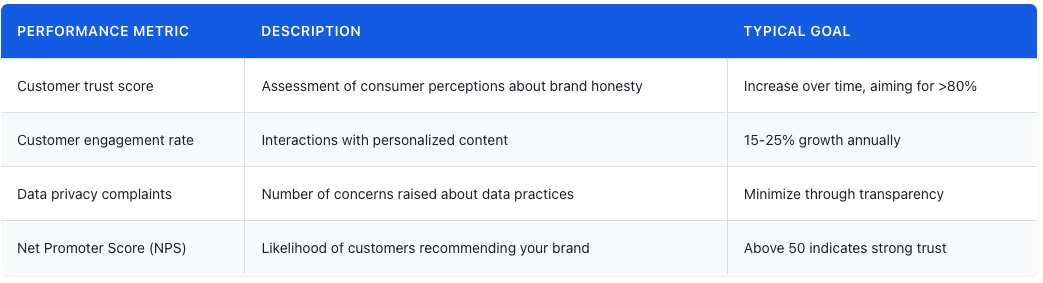
Regularly tracking these metrics helps refine strategies, ensuring that personalization remains relevant and transparency is maintained. Trust-building is an ongoing process, requiring consistent effort and adaptation to evolving customer expectations.
As technology advances, so do consumer expectations. AI-driven personalized ads are becoming more sophisticated, but their success depends on ethical implementation. Consumers want brands to leverage AI responsibly, balancing innovation with transparency.
Emerging trends include the adoption of blockchain for transparent data management and increased emphasis on ethical AI. Companies that prioritize these innovations will likely see enhanced trust and customer loyalty, positioning themselves ahead in the competitive landscape of 2024 and beyond.
Ultimately, building trust through personalized, transparent marketing strategies is a strategic necessity. Embracing ethical practices and clear communication fosters a loyal customer base that values authenticity. As brands adapt to these evolving expectations, they will not only survive but thrive in a marketplace increasingly driven by trust and integrity.

Drive more revenue
with your AI marketing team


.svg)
