A comprehensive article to understanding and implementing SMART goals (Specific, Measurable, Achievable, Relevant, Time-bound) for personal and professional success.
April 30, 2026
Tellem AI team
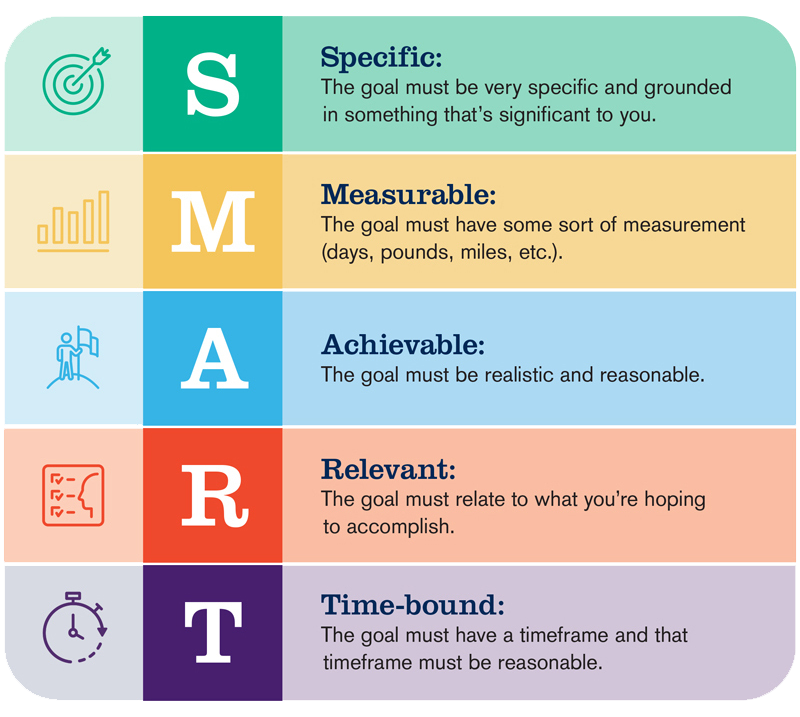
Setting clear and achievable goals is fundamental for success, whether in personal development or professional endeavors. The **SMART** framework provides a structured approach to goal setting, ensuring objectives are well-defined and attainable. Originally introduced by George T. Doran in 1981 and later expanded by Professor Robert S. Ruben, SMART is an acronym for Specific, Measurable, Achievable, Relevant, and Time-bound.
SMART goals are designed to be precise and easy to communicate, serving as effective key performance indicators (KPIs). This methodology transforms vague aspirations into clear, actionable plans.
A specific goal clearly defines what needs to be achieved, leaving no room for ambiguity. It answers questions such as:
* What are the concrete steps of our project ?
* Who are the necessary stakeholders for its realization ?
* Where should we focus our efforts ?
* What is the benefit for our long-term strategy ?
* What is the priority of this objective compared to others ?
> Example : Instead of "save the world," Superman might set a specific goal to "prevent Lex Luthor's scheme." This allows him to focus his efforts and prioritize against the supervillain rather than, for instance, saving an endangered bird.
A measurable goal includes quantifiable criteria for tracking progress and determining when the goal has been met. It addresses:
* What data do we need?
* Where will our data be stored, and how will we access it?
* Is our data reliable and verifiable?
* What is a reasonable milestone?
* How many milestones are needed?
* How will we know that we have achieved our goal?
> Example: If the goal is to reach a mountain summit in one day, one would calculate the kilometers to cover per hour to track progress. This is more effective than starting in the mid-afternoon hoping to reach the summit by sunset.
An achievable goal is realistic and attainable, considering available resources and constraints. It asks:
* What steps are necessary to achieve this goal?
* What is our direct influence on its realization?
* Is this goal realistic compared to previous performance?
* Are there analogous cases?
* Why do we consider this an acceptable goal?
* What external (and internal) factors might prevent us from achieving this goal?
> Example: If the ultimate goal is to optimize abandoned cart management but nothing has ever been donne for this, start with a plan. It is not relevant to say you want to "improve by 100% abandoned cart conversions".
A relevant goal aligns with broader objectives and is meaningful to the individual or organization. It considers: Why is this goal relevant today? Why wasn't it relevant yesterday? Which team members are best suited for this goal? How will this goal contribute to a long-term strategy? What is the expected Return on Investment (ROI)? What are the possible consequences of failure?
> Example: if the ultimate goal is to climb Mount Everest but you have never done mountaineering, it is unrealistic to aim directly for Everest. A relevant approach is to first define a realistic training program.
A time-bound goal has a clearly defined deadline, creating a sense of urgency and providing a target for completion. It asks: Is this goal acceptable given the deadline? What is the minimum/maximum time required? What obstacles or temporal factors could cause delays? What has been accomplished in similar timeframes? When and how should progress be evaluated? What if we go astray halfway? Can progress naturally slow down or speed up at certain stages?
> Example : Instead of a wanting to build a micro SaaS "I will build it this year," a time-bound SMART goal would be "I will build the first feature by end of january," with progress evaluated every two weeks.
Let's put it all together with a real-world example of a SMART goal :
"I will increase my monthly freelance revenue from €2,000 to €3,500 by acquiring two new clients per month, through LinkedIn outreach and referrals, within the next 6 months."

So to summary, to set up your SMART goal :
Start with your intention : what area of your life do you want to improve? (Career, health, finance, learning...)
Apply each SMART filter : run your goal through each of the 5 criteria and refine it.
Write it down : putting it on paper (or screen) makes it real and increases commitment.
Break it into milestones : divide your goal into weekly or monthly checkpoints.
Review regularly : check your progress every week and adjust if needed.
Share it : telling someone creates accountability.
>Setting too many goals at once... Focus on 1 to 3 SMART goals maximum at a time.
>Confusing tasks with goals : "Send 10 emails today" is a task. "Land 2 new clients in 3 months" is a goal.
>Never revisiting your goals : life changes. Review and adapt your goals regularly.
>Ignoring the "Why" : without a strong reason behind your goal, motivation will collapse at the first obstacle.
SMART goals don't guarantee success, but they dramatically increase your odds. By making your goals Specific, Measurable, Achievable, Relevant, and Time-bound, you replace wishful thinking with a clear roadmap.
As we say, the best time to set a SMART goal was yesterday. The second best time is now...

Drive more revenue
with your AI marketing team


.svg)
